
EMART softbox lighting kits with stands for photography
EMART softbox heads, continuous LED lamps and full two- and four-light kits with stands, grids and carry bags — the light that goes up next to a photography backdrop.
35 results in Softbox Lighting Kits
-
-
65in
-
65in
-
-
-
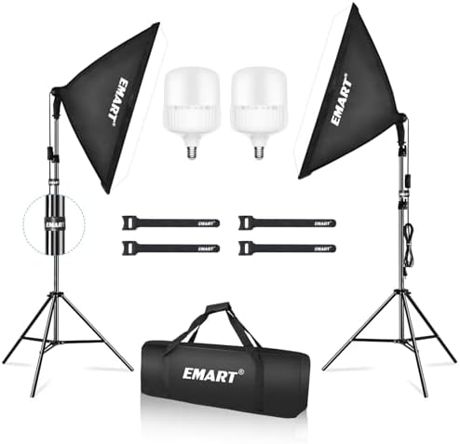
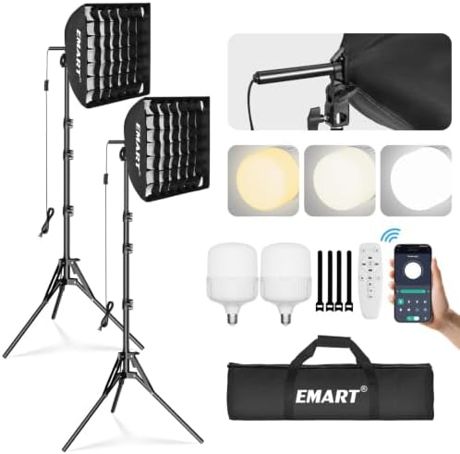
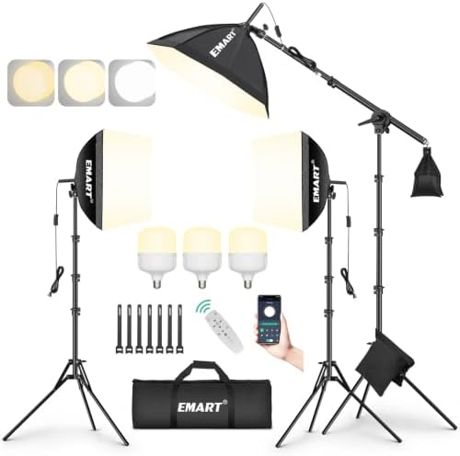
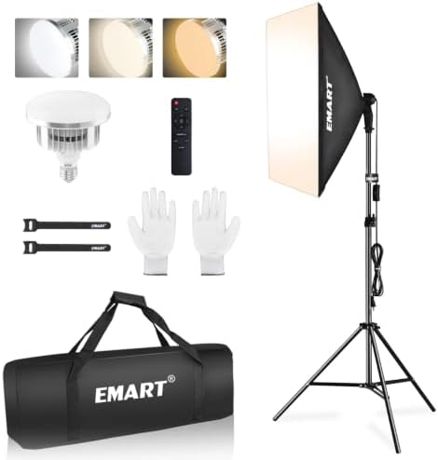
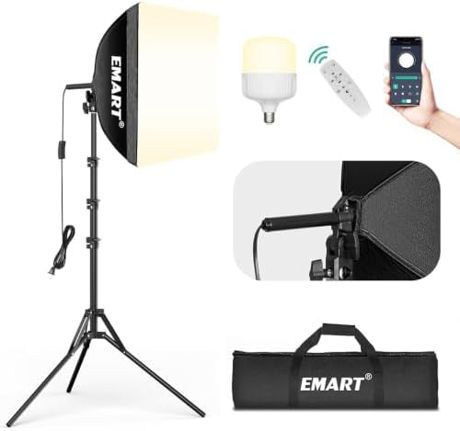 EMART Softbox Photography Lighting Kit 1Pack 50W LED 16"x16" Pull Soft Box
$4399
Currently unavailable
-
-
83in
-
-
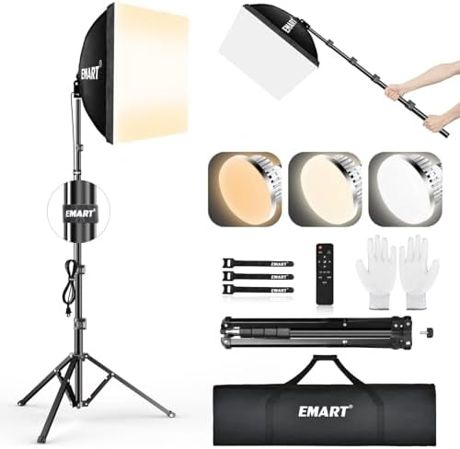
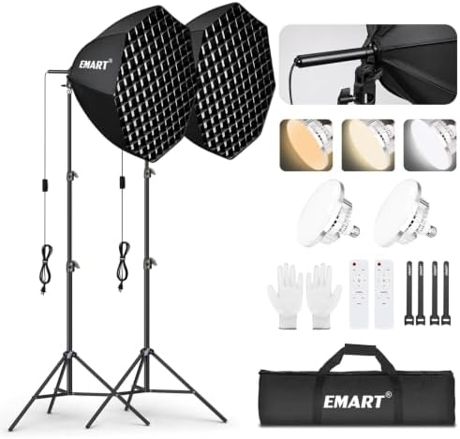
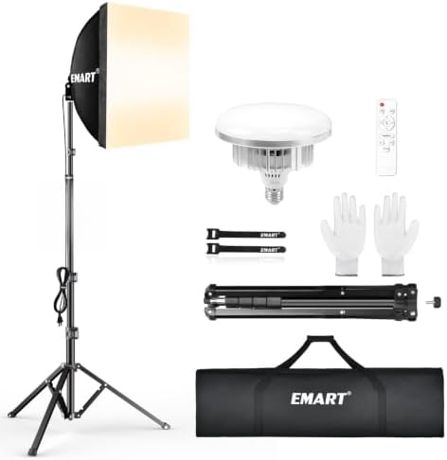
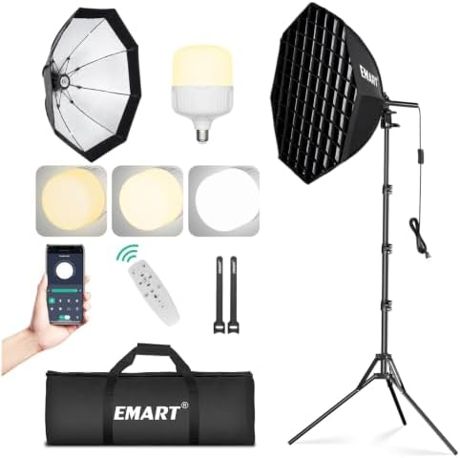 EMART Softbox Lighting Kit with Grid, 50W 20"x20" Soft Box for Photography
- Softbox Lighting Kit w
- 2 options
$5999
Currently unavailable
-
-
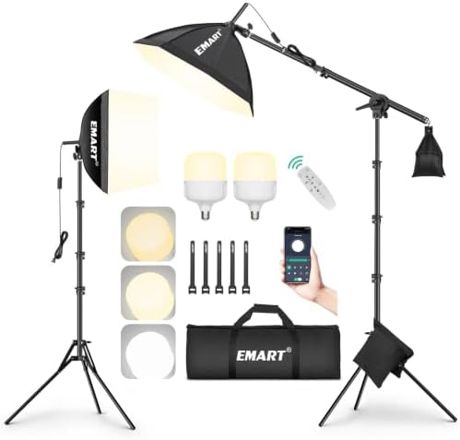
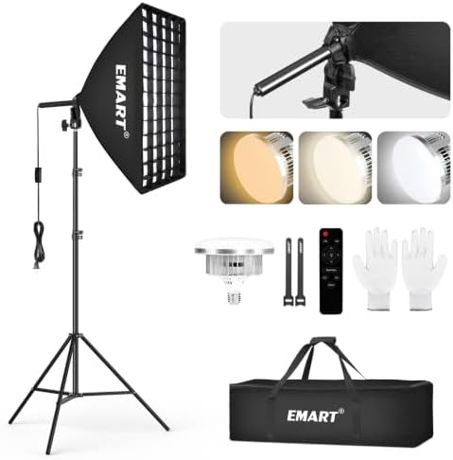 EMART Softbox Lighting Kit with Grid, 85W 20"x28" Soft Box for Photography
- Softbox Lighting Kit w
- 2 options
$5999
In Stock
-
-
-
7ft
-
65in
-
65in
-
31.5in
-
31.5in
-
-
-
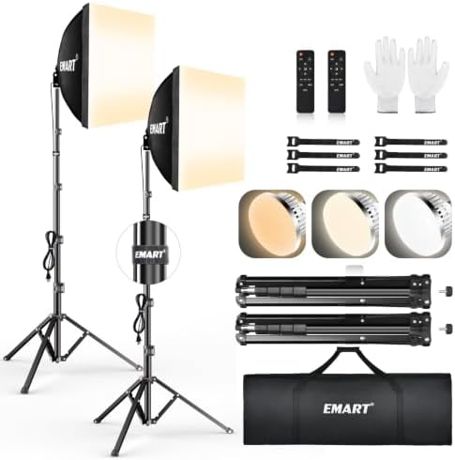
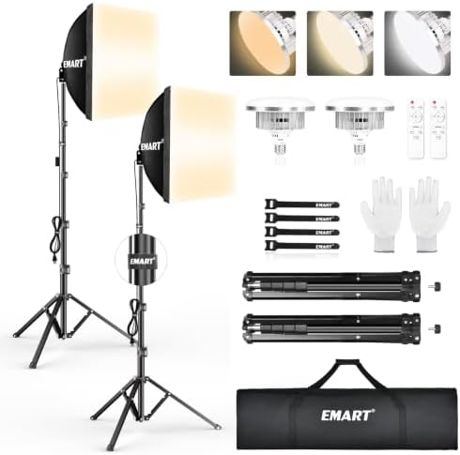
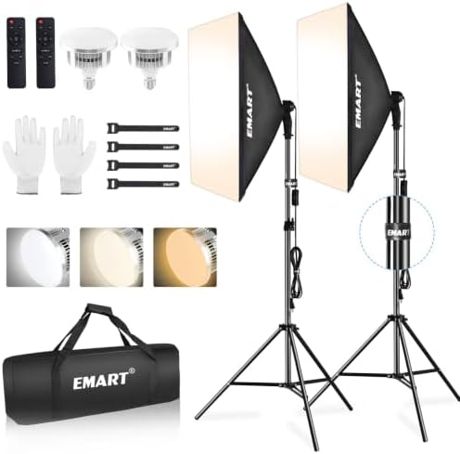
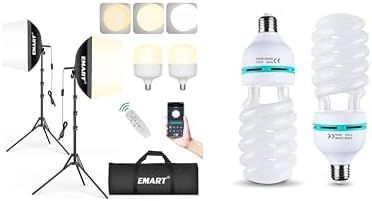
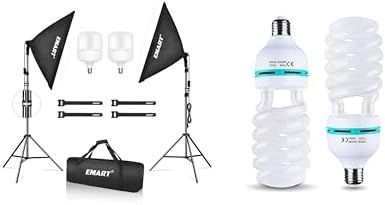
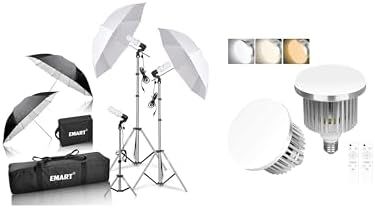
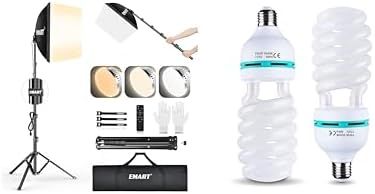 EMART Softbox Lighting Kit, 16"X16" Soft Box, 3000K-6000K 85W LED Bulbs with Remote, 2 Pack 105W Spiral CFL 5500k Daylight Studio Lights, Portrait, Video Recording
- Softbox Lighting Kit,
- 2 options
$6203
In Stock
-
83.9in
-
-
10ft
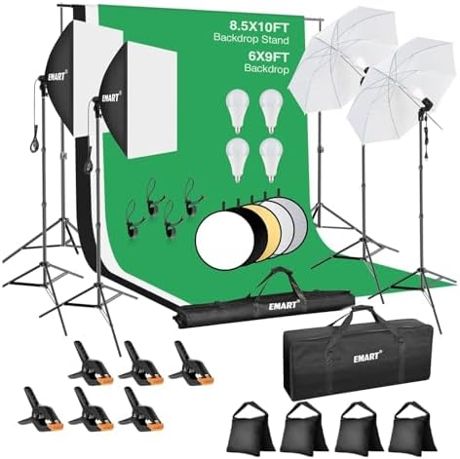
-
7ft
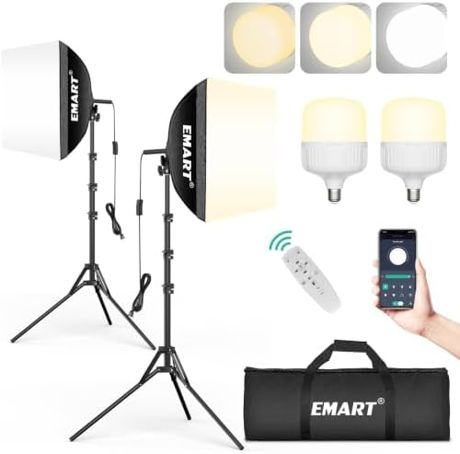
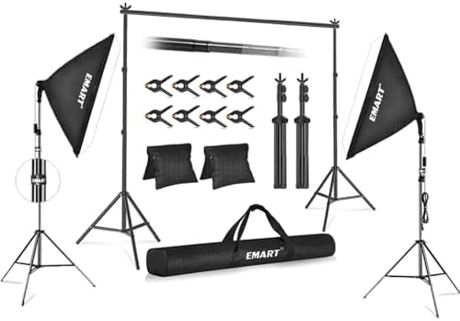
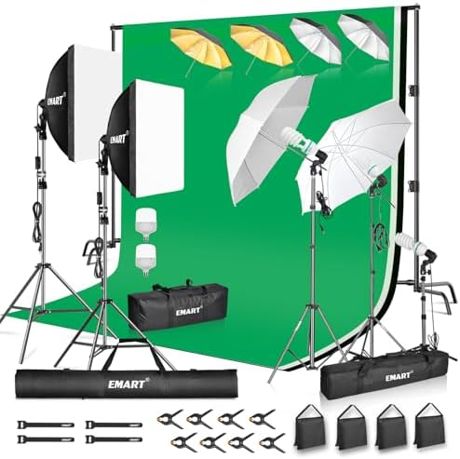
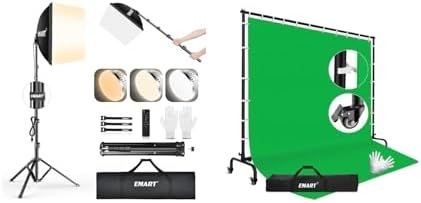
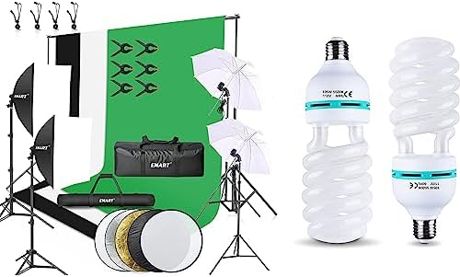
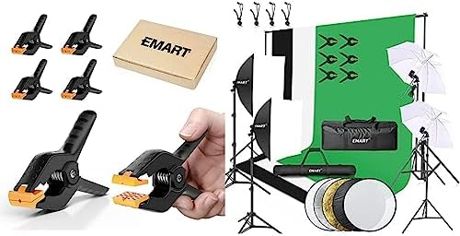
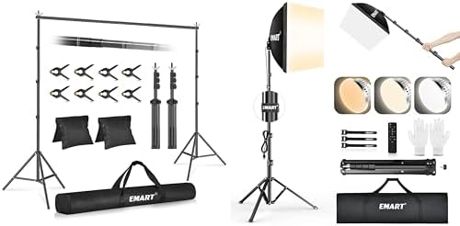
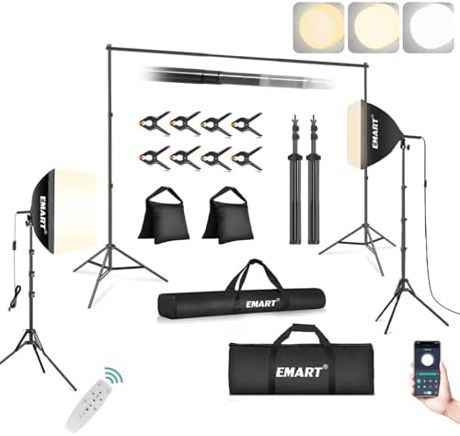 EMART Backdrop Stand 10x7ft(WxH) Photo Studio Adjustable Background Stand Support kit 16"x16" Pull Softbox Photography Lighting Kit with 50W 3000K-6000K LED Bulb with Remote/APP Control
- Backdrop Stand 10x7ft(
- 2 options
$8101
In Stock
-
10ft
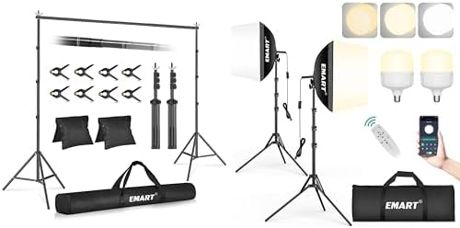
-
-
10ft
-
10ft
-
10ft
-
-
-
-
3.4ft
About softbox lighting kits
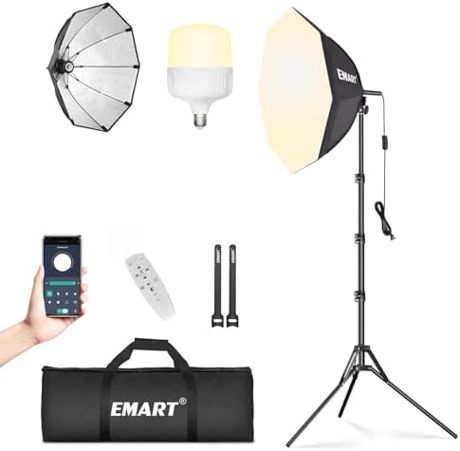
A softbox is a box that turns a small bright source into a large dull one, and large dull light is what makes a face look like a face. Our softbox lighting kits ship as a working set: head, lamp, box, grid where it helps, stand and a bag that holds all of it. The sizes we build are the ones that fit real rooms — sixteen and twenty inch squares for a desk or a seated portrait, twenty-five inch and larger for standing subjects and product tables.
The LED heads run on a wide colour range so one kit covers a daylight room in the afternoon and a tungsten room at night. Output is dimmable from the head, which matters more than peak wattage: most indoor shoots are spent turning lights down, not up. Where a kit includes a grid, it is there to stop spill reaching the background so you can light the subject and the backdrop separately with two heads instead of four.
Every kit page lists the wattage, the colour temperature range, the box dimensions and what is in the bag. If a set includes a backdrop stand and fabric, that is spelled out too — a lighting kit that quietly expects you to own a frame is not a kit.
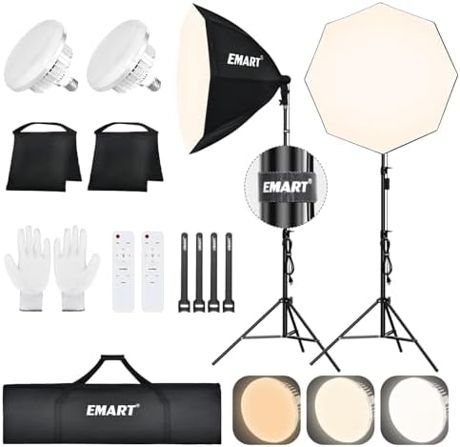
A kit arrives as parts and goes together in a fixed order: stand up and legs squared, tilt bracket on the column, lamp into the fitting, box onto the bracket, diffusion last. The stands are telescopic with a standard mounting thread, so a head from one kit fits a column from another. Spread the legs fully before the box goes on — a softbox is a sail with a frame around it, and the most common accident on a set is a fully extended stand with nothing holding the base. One sandbag per leg solves it.
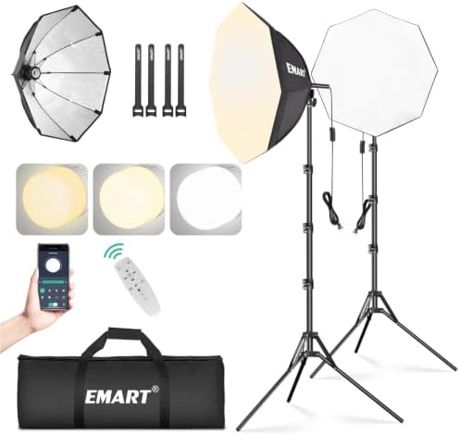
Two heads will take you further than you expect: a key at about forty-five degrees and a fill pulled back on the opposite side. Add a third on the background and the subject stops being stuck to the backdrop behind them. Grids are there to keep spill off the background so you can light the two separately. Everything folds flat into the carry bag — boxes collapse like umbrellas, the stands come down to a compact length, and the whole kit transports as one piece of luggage. Keep the lamps in their sleeves and the durability looks after itself.
Light, and the EMART photography backdrop stand it points at
A softbox kit lights a subject; it does nothing at all for what is behind them. That is why these sit next to the frames rather than apart from them: a photography backdrop stand gives you a background to light, and a third head on a seamless white, black, green or muslin surface is what separates a portrait from a passport photo. The same two heads serve types of work that look unrelated — portraits, recorded interviews, pet photography, product shoots, weddings — and the support system behind the chair is what makes them look deliberate. Choosing is about space again. Measure the wall, position the stands clear of the walkway, and remember that a column fully expanded needs more floor than a background stand does. Leave extra room so an additional head or a prop can go in, and keep the subject forward rather than directly against the cloth.
The parts that decide quality are the ones nobody photographs. Aluminum alloy columns are the portable, popular choice; heavy metal is the professional one where a kit lives in a studio and never moves. Durability is in the locking collar, the tilt bracket and the fitting where the lamp threads in, not in the fabric of the box. A standard mounting thread is essential, because it means a head from one kit assembles onto a tube from another without needing an adaptor. Everything folds flat into the carry bag: an excellent package is compact, stable in two hands and quick to transport. Setup takes minutes — stands up, boxes on, diffusion last — and care is a cloth and a dry cupboard. Enhanced output and a powerful number on the label matter less than the practicality of a kit that opens, locks and creates the same light twice.
Asked between takes
How many heads does a starter studio need?
Two will take you further than you expect: one key at forty-five degrees to the subject, one fill on the opposite side, pulled back and lower. A third head on the background is what separates a portrait from a passport photograph. Kits in this section are sold as complete sets so you are not matching colour temperatures between two shopping trips.
What size softbox should I use?
The larger the box relative to the subject, and the closer it sits, the softer the shadow edge. For head-and-shoulders work, a box roughly as wide as the subject's torso at arm's length is a sensible start. Small boxes close in behave like large ones; the same box across the room behaves like a bare bulb.
Is continuous light better than flash for video?
For anything that moves, yes — you see exactly what you are recording, and you can light by eye rather than by test frame. Continuous heads also suit tabletop and product work, where you are adjusting reflections millimetre by millimetre. Flash still wins when you need to freeze motion or overpower daylight.