Asked between takes about EMART photography backdrop stands
Everything we are asked about EMART photography backdrop stands, lighting kits and the grip between them, in one place.
What to check before you buy a photography backdrop stand
Nine questions in ten are answered by four numbers printed on every page in this catalogue: the span of the frame fully expanded, the maximum working height, the rated load and what is in the package. Read those first, because between them they decide whether the frame will accommodate your background and how long the setup takes. If a figure is missing from a page it is because our own listing does not state it, not because leaving it out flatters us.
The rest is usually a choice between two honest options. A compact, portable aluminum support stand that one person carries, or a heavy frame with enhanced stability that stays stable where it is put. A collapsible panel folded into a carry bag, or a muslin surface on a crossbar. A seamless white sweep for product photo work, black for interviews, green for keying. Neither answer is the professional one and neither is the more powerful — the popular choice and the right choice are not the same thing, and the pro kit is the one you will actually create sets with.
Single, double and triple crossbar
How tall should a backdrop stand be?
For seated portraits, seven feet of working height is enough to keep the top edge of the fabric out of frame. For standing full-length shots, plan on eight and a half feet or more so the background clears the subject's head with room to spare, and so the hem can pool slightly on the floor rather than stopping at ankle height.
Do I need sandbags on a single crossbar stand?
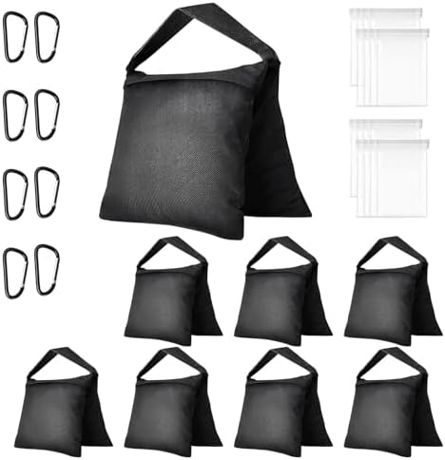
Indoors, with nobody walking behind the frame, usually not. At an event, always. A loaded crossbar puts the weight high, and a backdrop behaves like a sail in any moving air, including a doorway being opened.
Can one stand take different widths of background?
Yes — the crossbars are telescopic, so a frame rated for a ten-foot span will also hold a five-foot panel. Clamps let you gather the fabric at whatever width you are shooting. Going the other way does not work: a short bar does not become long.
Backdrop size by shot
What backdrop size do you need for portraits and video?
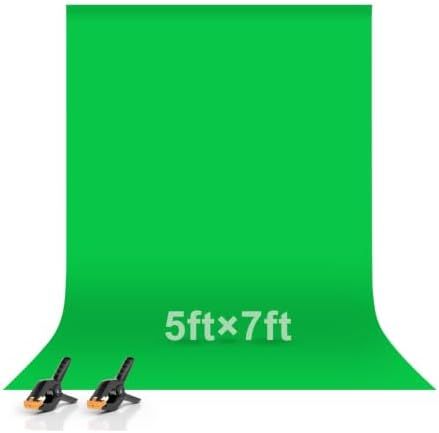
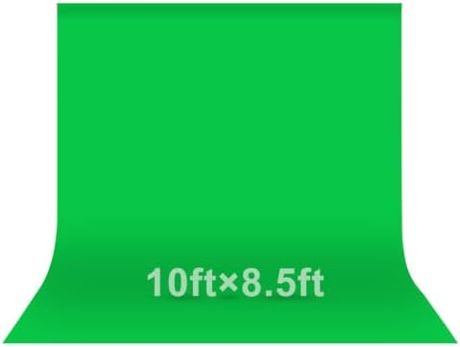
Head-and-shoulders portraits and seated video work comfortably on a five by six and a half foot panel. Standing full-length portraits want at least ten by twelve feet so the fabric reaches the floor and runs forward under the subject. Groups are governed by width: around ten feet of visible background for three or four people.
Does the subject need to stand away from the backdrop?
Yes, and it solves more problems than any other free adjustment. A couple of feet of separation keeps light from the key off the fabric, lets the background go darker or lighter independently, and stops creases from being lit edge-on.
Is paper or fabric better for a seamless background?
Paper gives a true seamless sweep and no creases at all, and it is consumable — you roll off the damaged part and cut it away. Fabric travels better, washes, and does not tear, at the cost of needing to be hung taut and sometimes steamed. Most people who shoot on location end up on fabric.
How to mount and support a photography backdrop stand
How do you mount and support a photography backdrop?
Three ways, in rising order of permanence: a freestanding frame with weighted feet, a wall-mounted roller system that pulls the background down like a blind, and a ceiling rail. Whichever you use, the fabric should be clamped or hooked at several points along the top bar so the weight is spread, and tensioned slightly wider than the cloth so it hangs flat.
What can I use instead of a backdrop stand?
A wall-mounted roller, a tension rod across an alcove, or clamps onto a shelf or door frame will all hold a small background. They stop working as soon as you need a full-length frame, because the drop is fixed by whatever you clamped to.
How many clamps does a backdrop need?
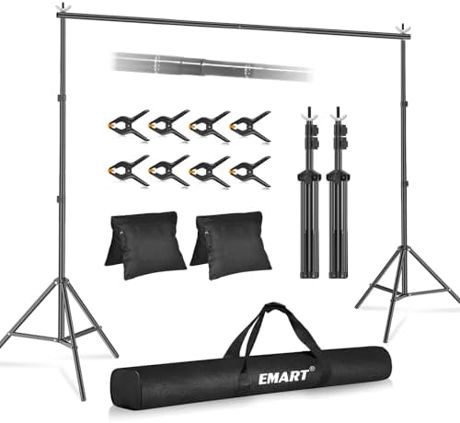
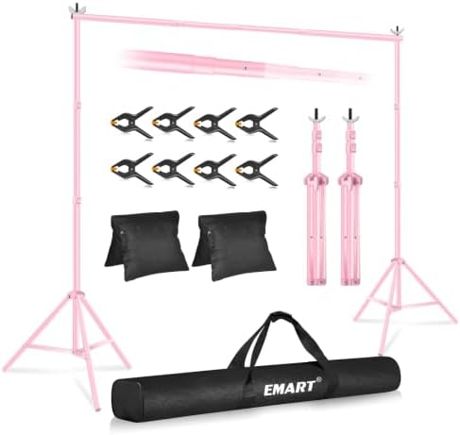
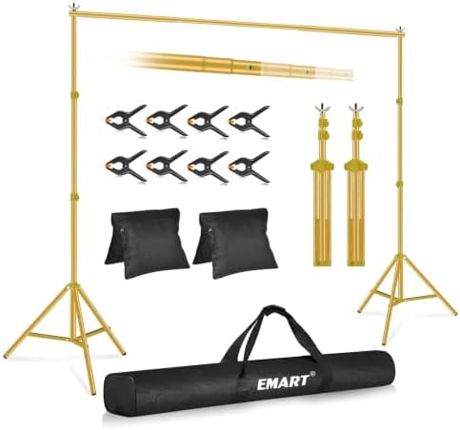
Two at the corners is the minimum and keeps the cloth from sliding. Four to six spread along the bar is what keeps the top edge straight on a ten-foot span, which is why our frames ship with a handful rather than a pair.
Photography backdrop stand fabric
How do you remove wrinkles from fabric backdrops?
Hang the fabric on the frame under its own weight for a few hours, then steam it from a hand's width away, working downward. Low-heat ironing with a cloth works for cotton and muslin but not for synthetic chroma key screens. Moving your key light away from a raking angle removes the appearance of wrinkles even when the wrinkles are still there.
How do you store and maintain backdrops to prevent damage?
Rolled, off the floor, out of direct sunlight, in the case it came in, with the clamps. Wash to the label, hang damp on the frame to dry, and never leave a roll of paper lying on its side.
Can a green screen be washed?
The polyester and spandex screens can, to the instructions on the listing. Wash cool, hang damp on the frame rather than tumble drying, and keep heat away from the surface — a shine on a chroma key screen is harder to grade out than a crease.
By shelf
What is a backdrop stand used for?
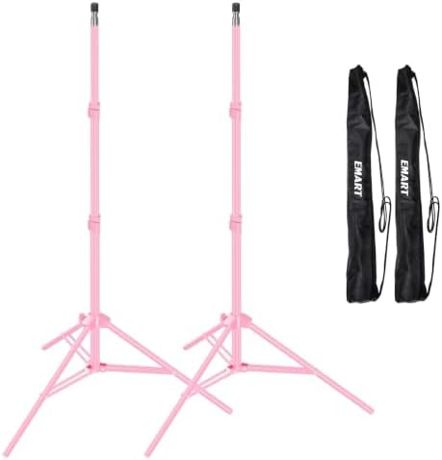
It holds a background up so you can control what is behind the subject. Portraits, product shots, interviews, photo booths and event walls all come down to the same job: a clean, even surface that does not move while you work. The support system carries the background; the clamps and hooks hold it; the sandbags keep the base honest when somebody walks past.
What backdrop is best for keying out a background?
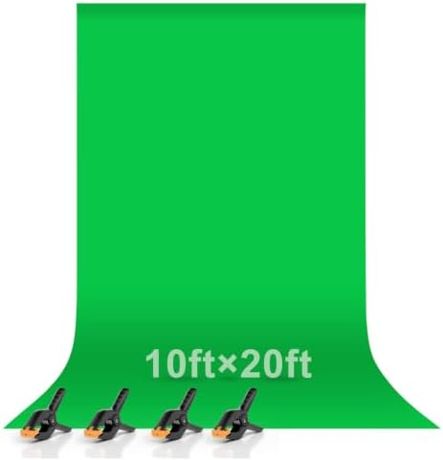
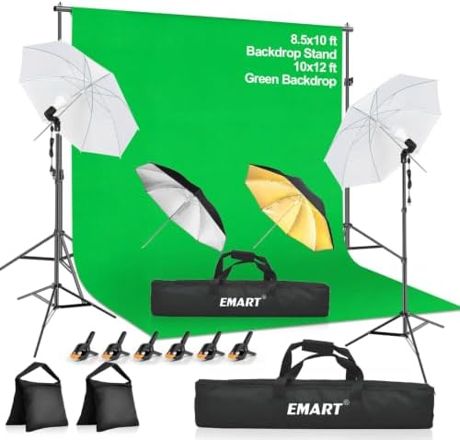
An even, matte green or blue panel lit flat, with the subject far enough forward that no colour spills onto their shoulders. Green suits most skin tones and daylight; blue holds up better under warm light and against blonde hair. A collapsible panel gives you an even surface in seconds; a cloth on a frame gives you more width for the same money.
How many heads does a starter studio need?
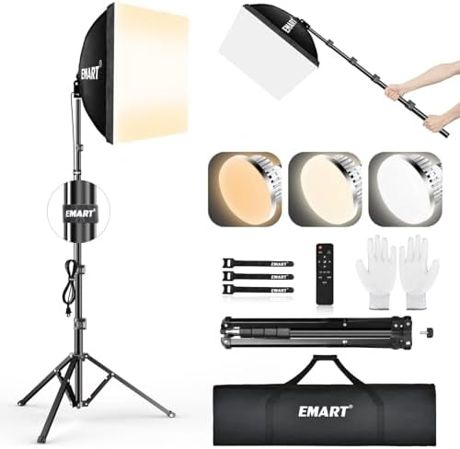
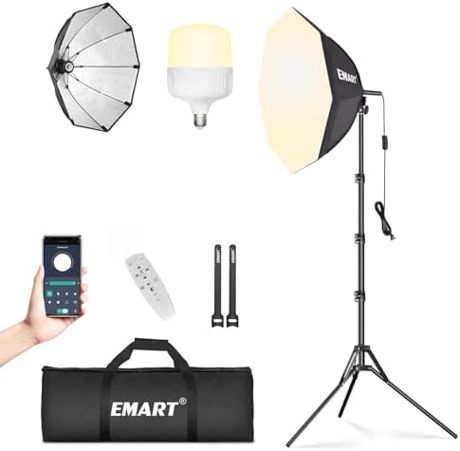
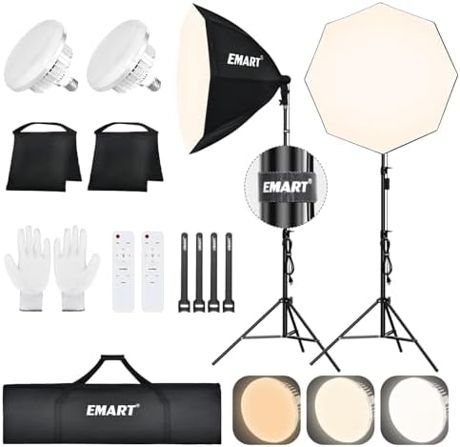
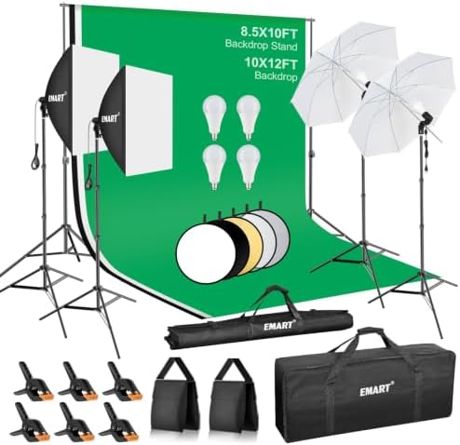
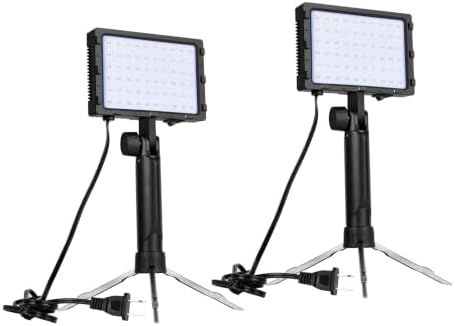
Two will take you further than you expect: one key at forty-five degrees to the subject, one fill on the opposite side, pulled back and lower. A third head on the background is what separates a portrait from a passport photograph. Kits in this section are sold as complete sets so you are not matching colour temperatures between two shopping trips.
What is the difference between a shoot-through and a reflective umbrella?
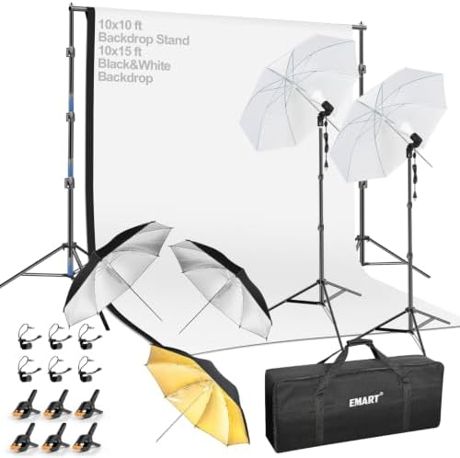
A shoot-through umbrella is translucent: the lamp fires through the fabric, giving broad, wrapping light that spills everywhere, which is forgiving in a small room. A reflective umbrella has an opaque back: the lamp fires into it and bounces, which is more directional and more efficient. Most kits here give you both so you can test the difference in your own space.
What size ring light is right for a phone?
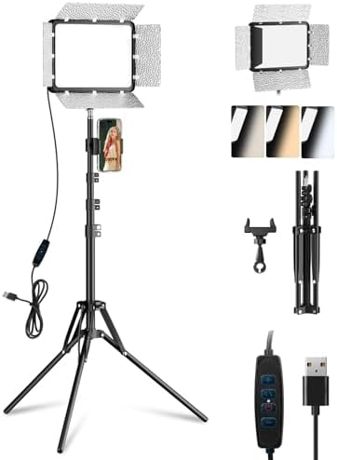
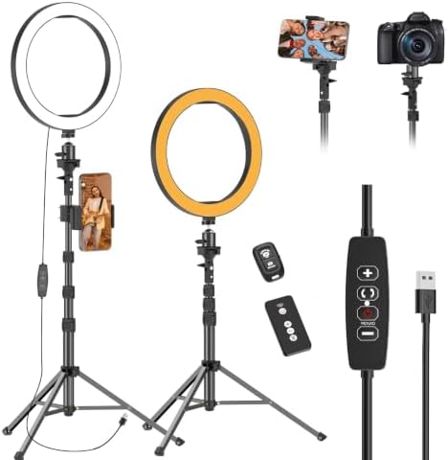
For talking-head video at arm's length, a ring in the ten-to-twelve-inch range gives a clean catchlight without filling the whole desk. Smaller rings travel better and suit close product work; larger ones soften the shadow under the chin. Every ring in this section prints its own diameter and the height of the stand it ships with.
What is the difference between a light stand and a tripod?
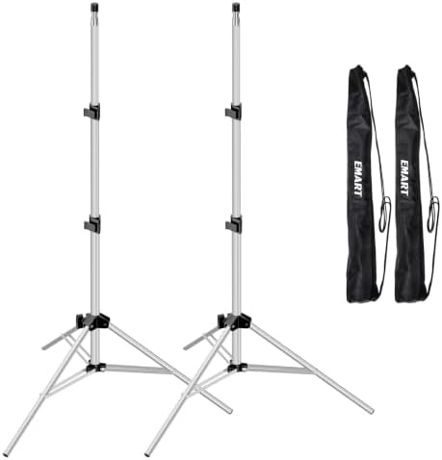
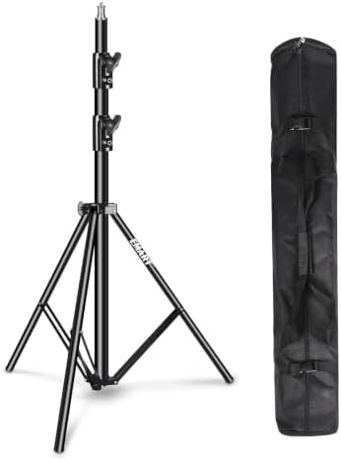
A light stand carries weight straight down a single column and is built to go high cheaply. A tripod is built to hold something still and level, with a head that aims it. Columns with spring cushioning protect the lamp when a section drops; a tripod base keeps a frame from walking when somebody brushes past it.
What do the clamps and clips actually hold?
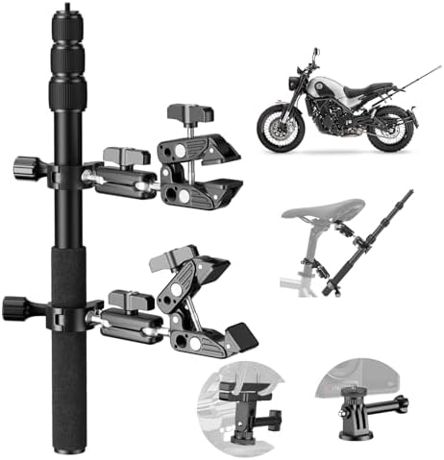
Background fabric to a crossbar, mostly — that is the job they are bought for. They also hold reflectors to stands, cable out of shot, and the corner of a panel that refuses to hang flat. A set of spring clamps is the least glamorous thing in the case and the first thing you reach for.
How is an event backdrop different from a studio one?
Scale and audience. A studio background has to be invisible; an event background is part of the decoration and gets photographed by everybody in the room. That means wider frames, fabric that reads well under phone cameras, and a base solid enough to stand in a corridor of moving guests.
Still choosing an EMART photography backdrop stand?
Write to us. Tell us the wall across, the ceiling height and what the frame has to serve — portraits, product photo work, pet or event sessions, weddings, recorded interviews — and we will name a model rather than a range. The practicality of a support system is a conversation and not a spec sheet: how quickly it assembles, whether the legs open to their stops in the space you have, whether the standard fitting on the tube takes the light you already own.
Two habits save most of the trouble. Keep the small metal — clamps, hooks, an additional plate, a spare thread adapter — in the same bag as the fabric, so you never arrive with one and not the other. And treat transport as the thing that decides durability: the quality of a background stand shows in the collar that secures a section and in the material of the joints, not in the finish. An excellent design is one that still goes up quickly, in general, after a year of being thrown in a car, and the care it needs in return is ten seconds of rolling cloth instead of folding it. Position the base where nobody kicks it, leave extra width for a prop or a second panel, and the types of change a shoot throws at you stop being expensive.