Backdrop size by shot: what fits a photography backdrop stand
A backdrop a foot too small for the photography backdrop stand is one you spend the whole shoot composing around.
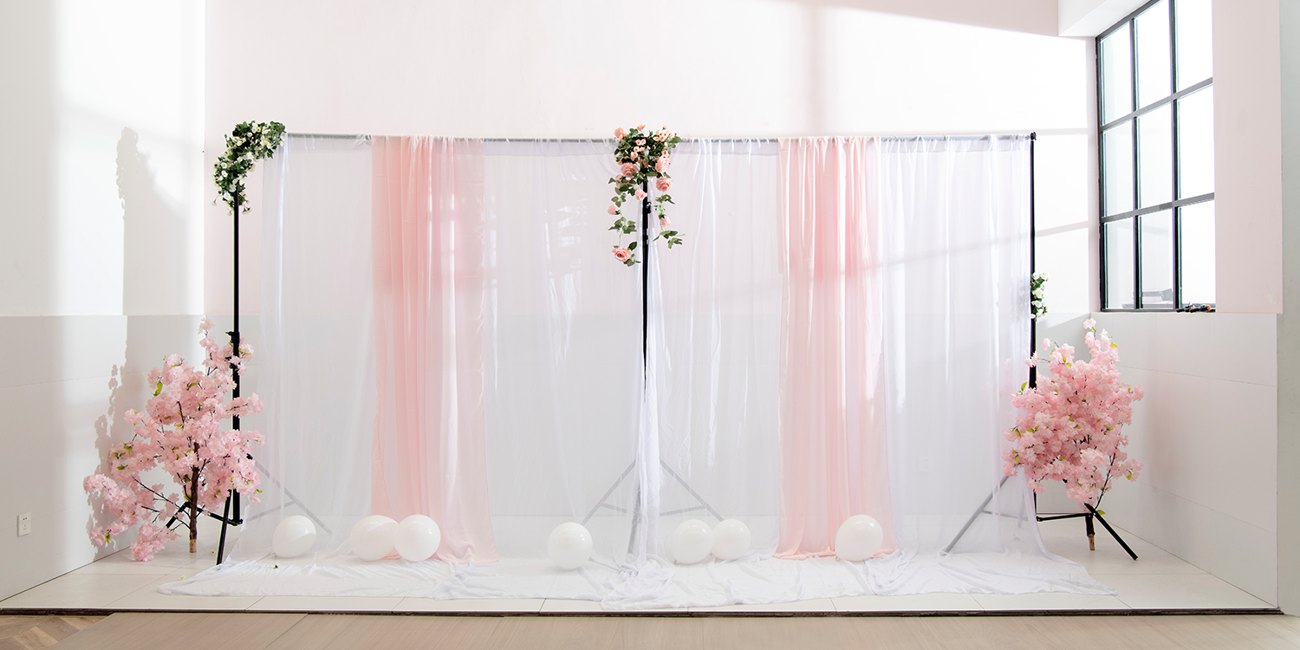
Start with the frame, not the fabric
Backdrop size is decided by three things in order: how much of the subject is in shot, how far the subject stands from the background, and how wide your lens is. Change any one and the fabric you need changes with it. The common mistake is to buy for the subject alone — a person is two feet wide, so five feet of background must be plenty — and then discover that a step back for a full-length frame brings both edges of the fabric into shot.
A quick rule that has not failed us: the visible background needs to be about twice the width of what you are photographing, and about a foot taller than the tallest thing in the frame.
Head and shoulders
For a headshot or a talking-head video, a five by six and a half foot panel is genuinely enough, and a collapsible screen on a spring hoop will do it. The subject sits a couple of feet forward, the lens sees a small area behind the shoulders, and the edges never come near the frame.
This is also the size that suits a streaming desk, because it can live behind a chair and fold away between calls.
Full length and seated groups
Standing full-length shots are where backdrops run out. You need the fabric to reach the floor and continue forward under the subject's feet, which costs you two to three feet of length that never appears as background. A ten by twelve foot backdrop on an eight-and-a-half foot frame is the smallest setup we would recommend for reliable full-length work.
Groups add width rather than height. Three people seated need about ten feet of visible background; add a foot for every extra person at the ends, because the people on the outside lean outward in every photograph ever taken.
Events and photo booths
A photo booth wall is sized for people stepping in and out, which means wider than it looks and anchored at the bottom. Ten feet across is the working minimum for groups of four, and a pipe and drape frame with weighted feet handles the traffic better than a tripod base that someone will stand on.
For video, add a little on top. A backdrop that looks fine in a still frame often shows its top edge the moment the camera tilts up or the subject stands.
Sizing an EMART photography backdrop stand to the room
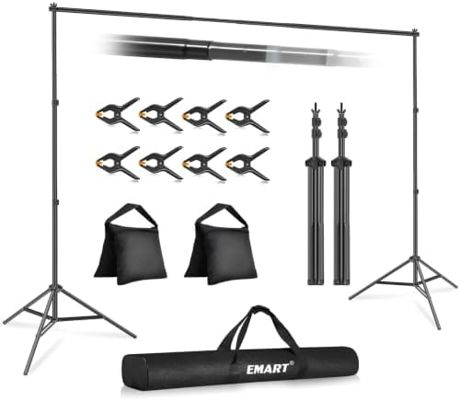
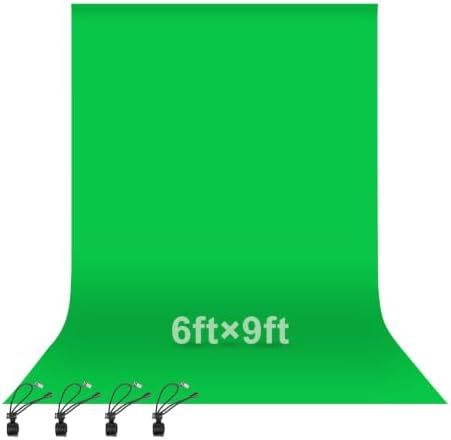
Size is a room problem before it is a shopping problem. Measure the wall across, subtract roughly a foot at each end for the legs and the fittings, and you have the span the frame has to accommodate when it is fully open. Leave a little extra width so an additional panel or a prop has somewhere to go, and position the feet clear of the walkway. Keep a step of space between the subject and the surface rather than putting them directly against it, because a face stood against cloth picks up every mark behind it. One support system will serve types of work that look unrelated — portraits, recorded interviews, pet photography, product photo work, weddings and an event booth — and choosing a seamless white, black, green or muslin surface is a separate decision from choosing the background stand it hangs on.
What decides quality on the frame has nothing to do with the fabric. Aluminum alloy keeps a support stand portable and is the popular choice for gear that travels; heavy metal gives enhanced stability and is the professional answer where a rig stays assembled. Durability is in the locking collar and the fitting at the top of the tube, not in the paint, and a standard mounting thread is essential because it lets a crossbar from one kit assemble onto uprights from another without needing an adaptor. A spring clamp secures the top edge, hooks accommodate the middle of the hang. The package folds into a carry bag, compact and stable to transport in two hands, so setup is quick and one person can create a set directly out of the car. Care is standard — wipe the metal, roll the cloth so a wrinkle never shows. Practicality is worth more on the day than a powerful or excellent-sounding number on the box.
Before you buy, in five lines
- Visible background about twice the width of the subject, a foot taller than the tallest thing in frame.
- Headshots and streaming desks: five by six and a half feet is genuinely enough.
- Full-length work: ten by twelve feet of fabric on a frame that reaches eight and a half.
- Groups: ten feet for three seated, plus a foot for every extra person at the ends.
- Event booths: go wider than you think, then weight the feet.
Asked between takes
What backdrop size do you need for portraits and video?
Head-and-shoulders portraits and seated video work comfortably on a five by six and a half foot panel. Standing full-length portraits want at least ten by twelve feet so the fabric reaches the floor and runs forward under the subject. Groups are governed by width: around ten feet of visible background for three or four people.
Does the subject need to stand away from the backdrop?
Yes, and it solves more problems than any other free adjustment. A couple of feet of separation keeps light from the key off the fabric, lets the background go darker or lighter independently, and stops creases from being lit edge-on.
Is paper or fabric better for a seamless background?
Paper gives a true seamless sweep and no creases at all, and it is consumable — you roll off the damaged part and cut it away. Fabric travels better, washes, and does not tear, at the cost of needing to be hung taut and sometimes steamed. Most people who shoot on location end up on fabric.