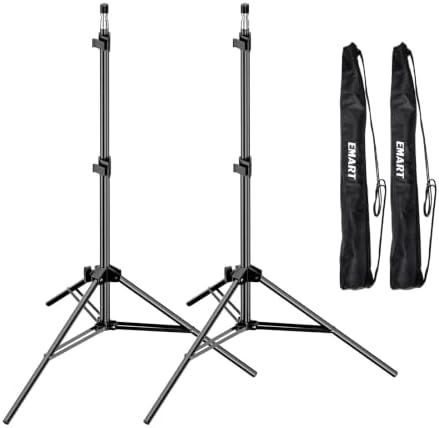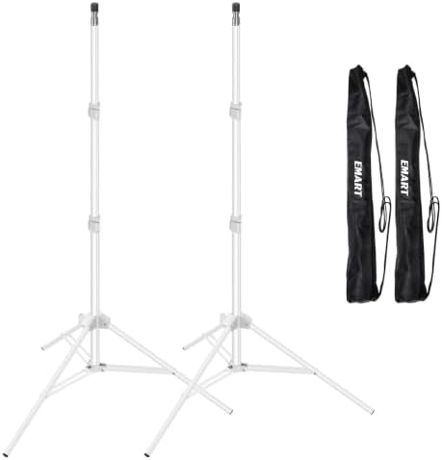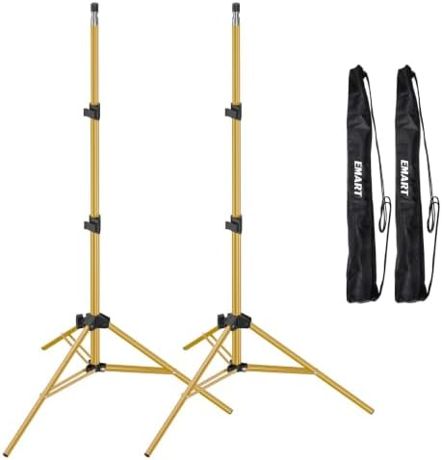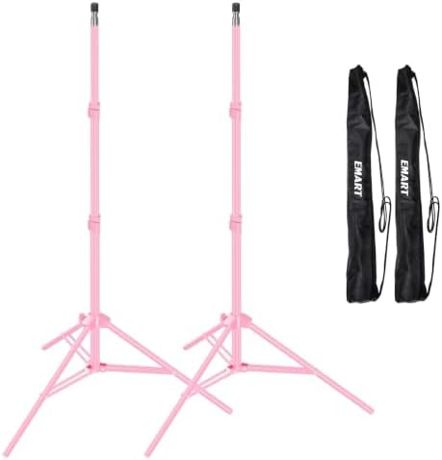
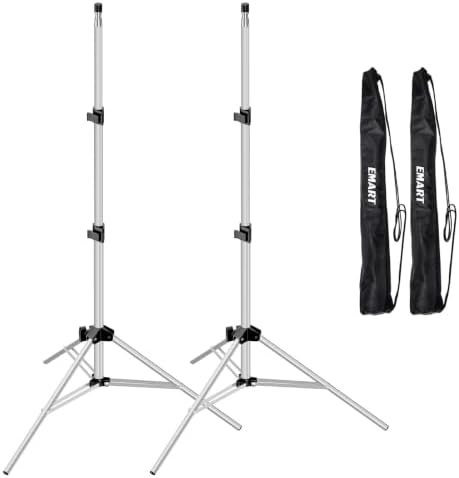
EMART 7Ft Light Stand for Photography, Speedlight, Softbox 2 Pack-Silver
EMART gear: photography backdrop stands, background support, lighting and the small metal.
Portable Photo Video Tripod Stand with Carry Case for Flash, Strobe Light, Camera, Photographic Portrait
4.6 1,974 reviews
$3599
In Stock
We keep our 7Ft Light Stand for Photography, Speedlight, Softbox 2 Pack-Silver in the range because most shoots need one dependable frame, not five clever ones. At full extension the top of the column stands 7ft, which keeps the hem off the floor in a small room.
The frame is aluminium alloy, which is the difference between a stand that travels and one that bends. It arrives with a portable format, a carry bag and a carry case. Everything we list is our own; the price you see is the one on our product listing today.
Key features
- Sturdy. Made of premium aluminum alloy which makes structure more stable, durable, portable and lightweight
- Extendable. Convenient to adjust the height. Height is adjustable from 2.5 ft - 7ft. Max load capacity 11 lbs
- Solid Locking. Its solid locking capabilities are super simple and easy to use and ensure the safety of your lighting equipment when in use
- Easy-carrying. The legs can also fold in and have a knob to lock them in place. Carry bag is good for storing and travelling
- Multiple Use. 1/4 inch threaded screw tip used for photo shooting, mounting strobe lights, umbrellas, softboxes and other photographic equipment; Both for studio and on-site use. 【Note: When use heavy-duty photographic equipment such as softboxes, strobe lights, you may need to match the sandbag to increase its stability】
Specification
| Height | 7ft |
|---|---|
| Material | Aluminium alloy |
| Reviews on the listing | 1,974 |
Where it sits in the range
EMART spring-cushioned light stands, heavy-duty C-stands with boom arms, reverse-folding tripods and phone stands for photography on location.
What this one is for
A light stand is the part of a kit nobody thinks about until something expensive hits the floor. This is a support stand built to go high cheaply and stay stable while it is up there, which is a different job from a tripod — a tripod is built to hold something still and aim it.
Sizing it against your photography backdrop stand
Choosing the size is arithmetic rather than taste. Measure the wall across, subtract roughly a foot at each end for the legs and the fittings, and you have the span the frame has to accommodate when it is fully open. Height comes next, and it is the figure that changes once a subject stands: a seated portrait is happy at seven feet, a standing one wants everything expanded so the top edge of a muslin, seamless white, black or green surface stays above the shot. Keep a step of space behind the subject rather than putting them directly against the surface. In a small room, buy a little extra width — that is where an additional panel, a light or a prop ends up living. As a general matter, one size up forgives more than one size down.
Putting it up
Setup, in order: extend each telescopic section, lock the adjustable collar, then square the base. The mounting fitting is standard, so heads and clamps from other stands assemble onto it without an adaptor, and it all happens quickly with two hands. Stability comes from the base rather than the column: spread the legs fully, position the feet out of the walkway, and it sits stable on a floor that is not quite flat. Anything heavy hanging on the system wants weight at the feet as well.
Clamping, hooks and the crossbar
Hang the surface a little narrower than the crossbar so it has something to pull against. A spring clamp secures each corner, hooks carry the middle, and that clamp will just as happily hold a light modifier or pin a cable to a tripod tube when the kit outgrows the room.
Carrying it and keeping it
It packs into the carry bag it arrives in — a portable, collapsible package small enough to live in a car boot between shoots, which is the only way gear gets used weekly. Material and durability are the same question here. Aluminum alloy is the light choice and steel the enhanced one, and the quality of a design shows in whether a section still locks after a year. Professional gear is rarely powerful; it is excellent at being predictable, which is practicality rather than polish. Wipe the metal down after an outdoor event, keep the small parts together, and store it standing rather than flat under something heavier. Fabric care is one rule: rolled, not folded — a wrinkle photographs.