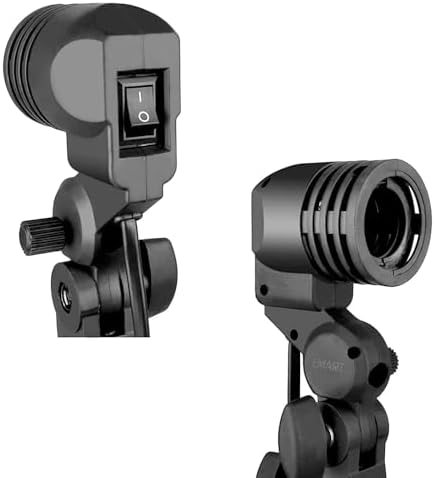
EMART E26 / E27 Light Bulb Socket Adapter with Photo Umbrella Lamp Holder
EMART gear: photography backdrop stands, background support, lighting and the small metal.
2 Pack 180° Adjustable Light Socket with 8.9FT Extension Cord & Lamp Switch, Studio Bulb Holder for Photography Light Stand
4.4 626 reviews
$2299
In Stock
We keep our E26 / E27 Light Bulb Socket Adapter with Photo Umbrella Lamp Holder in the range because most shoots need one dependable frame, not five clever ones.
You also get a portable format. We would rather you bought the smaller frame and used it than the big one that stays in the bag.
Key features
- Standard light socket, E26/E27 base, light bulb stand mount
- Photo lamp holder, 8.9 ft long power cord, Max wattage 105W CFL light bulb
- 180 degree adjustable angle, holds the light bulb and umbrella in place
- Portable switch, On/Off button at the end of AC socket light stand mount
Specification
| Reviews on the listing | 626 |
|---|
In the box
Package included: 2 x Light bulb holder socket
Where it sits in the range
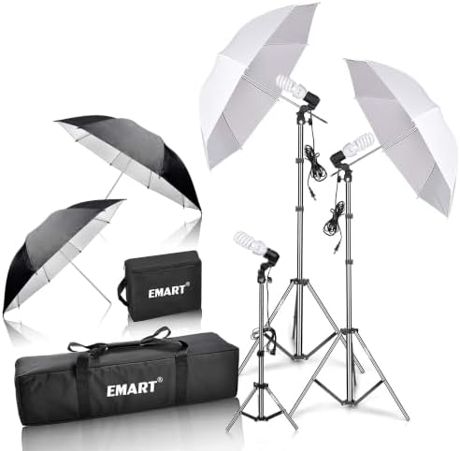
Shoot-through and reflective EMART umbrellas, translucent white and black-silver, sold as single heads and as full studio sets with the light stands photography needs.
Where it earns its place
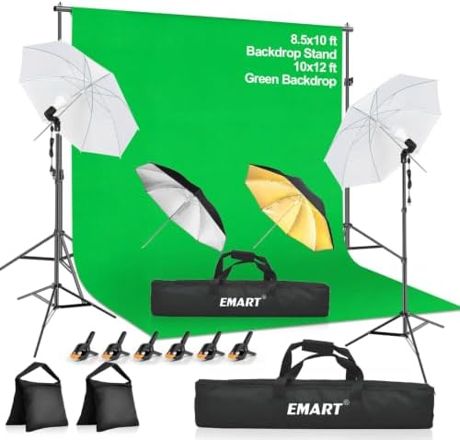
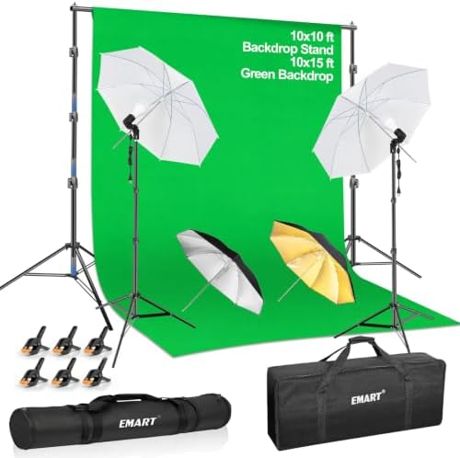
Shooting through a white umbrella gives broad light that wraps a subject; bouncing out of a black-backed one is more directional and keeps spill off the background. Most crews carry both and decide in the room, which is why the kits are packed as sets rather than single pieces.
Sizing it against your photography backdrop stand
Work out the size from the room rather than from the catalogue. Measure the wall you shoot against, take a foot off each end for the legs, and what is left is the span a frame opens to and can honestly accommodate. Height is the figure people change their mind about later: seven feet suits a seated subject, while a standing full-length shot wants the frame fully expanded so the top edge of a seamless white, muslin, black or green surface stays out of shot. Space behind the subject matters as much as space across it — stood directly against the surface, anybody picks up its texture. In a small room, give yourself a little extra at the back so an additional panel or a prop can go in without everything having to move. As a general rule, choosing one size up costs less than choosing one size down.
Setting it up
Setup is hands only. The sections are telescopic, so you assemble it by pulling up and locking rather than by counting parts, and the adjustable collars let you stop anywhere between the stops. Mounting uses the standard fitting for this type of gear, so it mates with what is already in your bag, and it goes up quickly enough to do alone. The legs open wide, and that width is the stability — not the thickness of the tube. Position the base so nobody kicks a foot, and add weight at the feet whenever the load is heavy or people are moving across the room behind the frame.
Hanging it and holding it steady
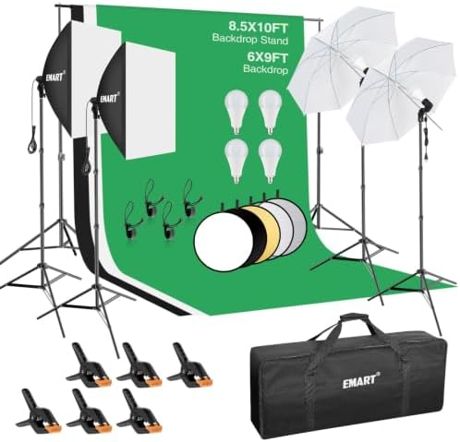
A spring clamp at each corner secures the top edge and hooks spread the load along the crossbar, so the surface hangs straight instead of scalloping between two points. The same clamp keeps a light cable or a tripod leg out of frame when the kit gets crowded, without needing a second pair of hands.
Bag, case and care
It packs into the carry bag it arrives in — a portable, collapsible package small enough to live in a car boot between shoots, which is the only way gear gets used weekly. Aluminium alloy keeps the weight sensible; the metal that decides durability sits in the locks and the joints, not the finish. The design is pro in the only sense that matters — practicality over appearance — and the material trade is plain: aluminum travels, steel survives. Keep it dry and the care budget is a cloth. Grit in a joint wears a section faster than rain does; a rolled surface arrives without a wrinkle, a folded one arrives with a map of itself.