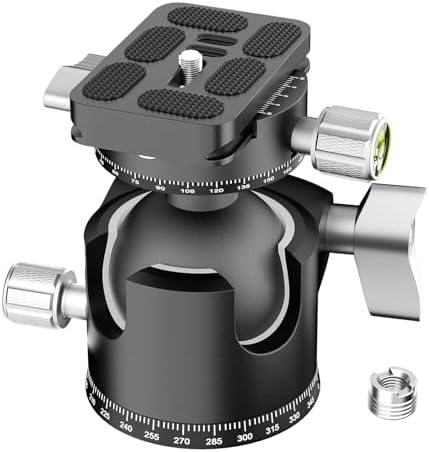
EMART Low Profile Tripod Ball Head with 1/4" Arca Swiss Quick Release Plat
EMART builds photography backdrop stands, background support and the lights that stand beside them.
4.8 7 reviews
$4999
In Stock
This is our answer for the setup that has to go up, hold still and come down the same evening.
The build runs to metal, which keeps the weight sensible without giving up on the joints. The build includes a portable format, a quick-release plate and 360-degree rotation. We would rather you bought the smaller frame and used it than the big one that stays in the bag.
Key features
- Low Profile Ball Head. Lower center gravity than traditional tripod ball head mount, provide more solid camera support.Max load 44lb/20kg
- Standard Quick Release Plate. Ball head mount with 1/4" arca swiss quick release plate, wide compatible with most cameras. Built-in level bubble for level adjustment
- 360° Swivel & 90° Tilt. The two U notchs design on the ball head ensures 360° panoramic and 90° vertical shooting in a flexible yet stable way, with a flip lock for quick, easy switch between portrait and landscape modes
- All Metal & CNC Machining. 44mm diameters camera ball head, more stable.1/4” & 3/8” thread for any tripod, monopod or other equipments
- Compact & Portable. Weighing just 0.82lb/372g, easily fits in your pocket, and carry it with ease wherever you go, perfect for outdoors or filming on the go
Specification
| Material | Metal |
|---|---|
| Reviews on the listing | 7 |
Where it sits in the range
EMART overhead camera rigs, magic arms, super clamps, suction mounts, ball heads, sandbags and the small metal that holds a photography backdrop stand together.
The job it does
Grip is everything between the camera and whatever it is attached to. Clamps hold backdrop fabric to a crossbar, arms hang a small light off a shelf, plates let a body come off a tripod without unscrewing anything. None of it is interesting and all of it is why a set stays where you left it.
What size EMART backdrop stand this suits
Choosing the size is arithmetic rather than taste. Measure the wall across, subtract roughly a foot at each end for the legs and the fittings, and you have the span the frame has to accommodate when it is fully open. Height comes next, and it is the figure that changes once a subject stands: a seated portrait is happy at seven feet, a standing one wants everything expanded so the top edge of a muslin, seamless white, black or green surface stays above the shot. Keep a step of space behind the subject rather than putting them directly against the surface. In a small room, buy a little extra width — that is where an additional panel, a light or a prop ends up living. As a general matter, one size up forgives more than one size down.
Getting it standing
Setup is hands only. The sections are telescopic, so you assemble it by pulling up and locking rather than by counting parts, and the adjustable collars let you stop anywhere between the stops. Mounting uses the standard fitting for this type of gear, so it mates with what is already in your bag, and it goes up quickly enough to do alone. A wide base is what keeps the support system stable when somebody walks behind the subject. Position two legs under the load, keep the third foot clear of the walkway, and hang anything heavy low rather than at full height.
Clamping, hooks and the crossbar
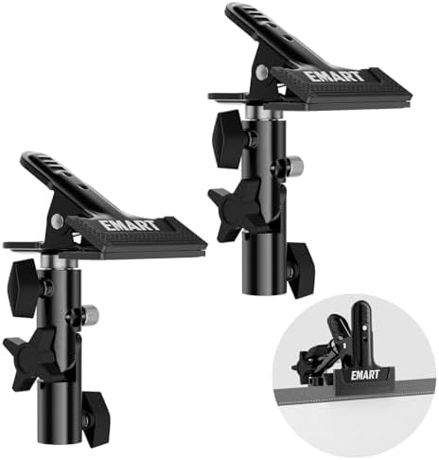
A spring clamp at each corner secures the top edge and hooks spread the load along the crossbar, so the surface hangs straight instead of scalloping between two points. The same clamp keeps a light cable or a tripod leg out of frame when the kit gets crowded, without needing a second pair of hands.
Travel, bag and care
It packs into the carry bag it arrives in — a portable, collapsible package small enough to live in a car boot between shoots, which is the only way gear gets used weekly. Aluminium alloy keeps the weight sensible; the metal that decides durability sits in the locks and the joints, not the finish. The design is pro in the only sense that matters — practicality over appearance — and the material trade is plain: aluminum travels, steel survives. Care is minimal: wipe the sections, keep the clamps in the same bag, store it dry. Roll fabric rather than folding it and a wrinkle stops being something you plan around.