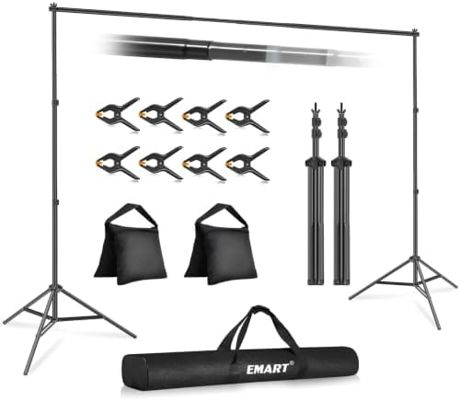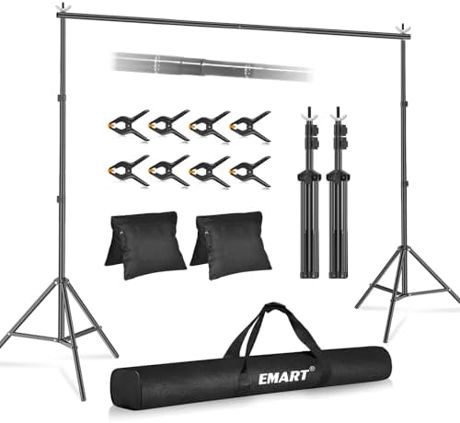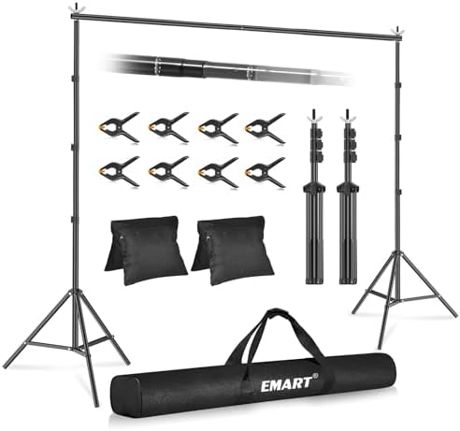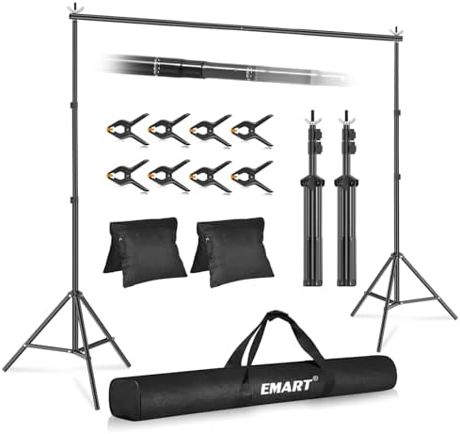
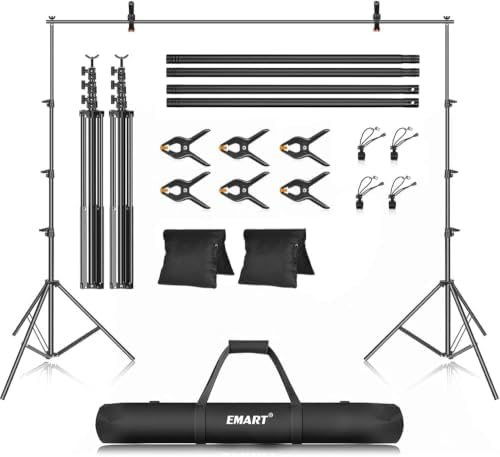
EMART Photo Backdrop Stand kit, 10 x 12 ft Back Drop Adjustable Frame for Photography, Photoshoot Banner Background Support Holder for Parties Dectoration
From the EMART range of photography backdrop stands, lighting kits and the grip between them.
4.6 16,883 reviews
$8099
In Stock
We keep our Photo Backdrop Stand kit, 10 x 12 ft Back Drop Adjustable Frame for Photography, Photoshoot Banner Background Support Holder for Parties Dectoration in the range because most shoots need one dependable frame, not five clever ones. 10ft of height at the top of the travel gives you slack to raise the whole background once the subject sits down.
The frame is aluminium alloy, which is the difference between a stand that travels and one that bends. We keep one listing per size so you are never guessing which box arrives.
Key features
- Adjustable Height&Width. With adjustable height (2.9ft/88cm–10ft/3m) and width (6ft/1.8m-12ft/3.6m ), the backdrop support system holds your backdrop in place and helps create different backgrounds for photography work.
- Strong and Sturdy. The aluminum alloy backdrop stand is durable with load capacity up to 8.8lb/4kg. And the design of the tripod base ensures it won’t shake when fully extended to its maximum size.
- Better Effect with Spring Clips. The clamp is made of strong and rugged type of plastic, strong spring and the rough surface enable itself to clamp anything onto the stand tightly and present a better shooting effect.
- Easy to Assemble. You can set up the backdrop stand in less than 5minutes without any tools.Only need to press down the bar spring clamp and insert the hole at the other end.
Specification
| Height | 10ft |
|---|---|
| Material | Aluminium alloy |
| Reviews on the listing | 16,883 |
Where it sits in the range
Every EMART set starts with the same question: what is holding the background up? These are our photography backdrop stands — single crossbar, double, triple, T-shape and full pipe and drape — sized by the width of background they carry.
What this one is for
This is a support system first and a photography accessory second. Hang a muslin, a white sweep, a black drape or a green chroma panel across the crossbar and the frame does not care which. What it cares about is the span, the working height and the weight at the legs — the three figures that decide whether a background stand is the right size for your room.
What size EMART backdrop stand this suits
Size is a room problem before it is a shopping problem. Take the wall you shoot against, measure across it and subtract a foot at each end for the legs — the rest is what the frame can accommodate once it is open. Then decide height, because that is the figure people change their mind about the moment the subject stands up: seven feet suits seated work, full-length needs the sections fully expanded so the top edge of a white, black, green or seamless muslin surface never appears. Leave space between the subject and the surface too; stood directly against it, a face picks up every mark behind it. A small room rewards a little extra span, which is where an additional panel or a prop goes. In general, choosing one size up is the cheaper mistake.
Putting it up
Setup, in order: extend each telescopic section, lock the adjustable collar, then square the base. The mounting fitting is standard, so heads and clamps from other stands assemble onto it without an adaptor, and it all happens quickly with two hands. Stability is a question of footprint. Open the legs to their stops, press the feet down, and position the base so the heaviest part of the load sits over it — weight in the right place does more for a support system than weight in total.
Clamps, hooks and the top edge
The crossbar carries the hang, the hooks spread it and a spring clamp secures the corners. Keep two spare clamps in the kit: one ends up on a light, one on a tripod tube, and neither is worth needing and not having.
Carrying it and keeping it
It packs into the carry bag it arrives in — a portable, collapsible package small enough to live in a car boot between shoots, which is the only way gear gets used weekly. Material and durability are the same question here. Aluminum alloy is the light choice and steel the enhanced one, and the quality of a design shows in whether a section still locks after a year. Professional gear is rarely powerful; it is excellent at being predictable, which is practicality rather than polish. Keep it dry and the care budget is a cloth. Grit in a joint wears a section faster than rain does; a rolled surface arrives without a wrinkle, a folded one arrives with a map of itself.