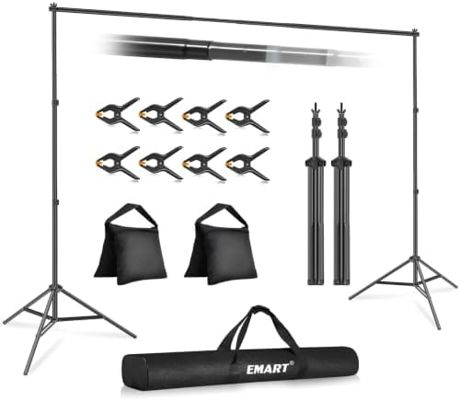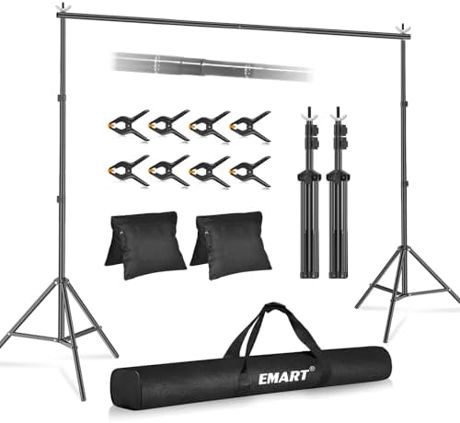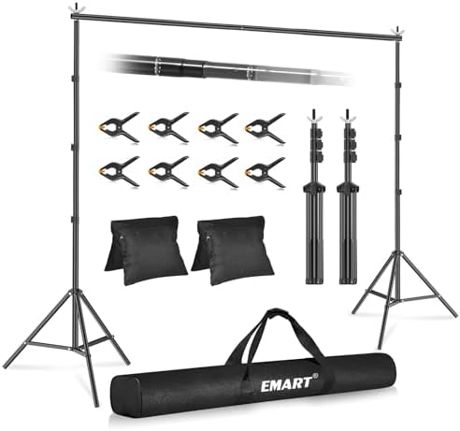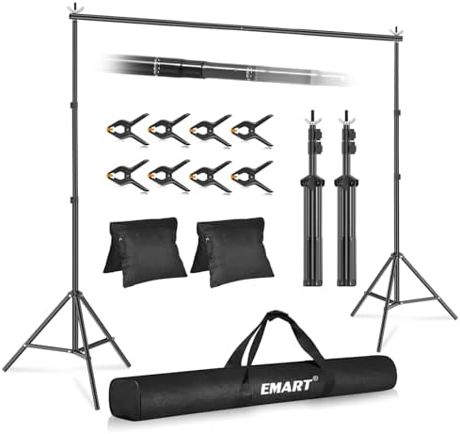
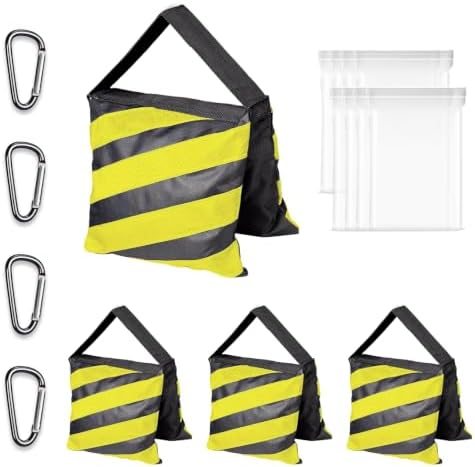
EMART 4Packs Sand Bags for Weight Yellow Sandbags for Backdrop Stand Canopy
One of the photography backdrop stands, lighting kits and support systems EMART makes.
Heavy Duty Sandbags(No Sands) for Light Stand Tripod, Photography, Pop Up Tent, Umbrella Base, Camping, Fishing Chair, Sports
4.4 3,532 reviews
$2099
In Stock
We put our 4Packs Sand Bags for Weight Yellow Sandbags for Backdrop Stand Canopy on the floor for crews who need the shot up before the light changes.
The build runs to aluminium and polyester, which keeps the weight sensible without giving up on the joints. You also get a heavy-duty build. Specifications here are read straight off our own listing — no rounding, no best case.
Key features
- High-quality Design. This sandbags are made of 1680D polyester fabric, which has a longer service life and can clean easily. And they features a double zipper design and a rubber lining to prevent sand or other fillings from leaking.
- Maximum Load-bearing Capacity. Each sand bag can hold a maximum of 26 lbs of sand, stones, soil and other items. Please note: Can not hold water, and the max weight of the sandbag will vary due to the different densities of the material.
- Usage Steps. First, fill the PE bag with sands or other fillers. Next, place the filled PE bag into sandbags. Finally, you can use aluminum clips to place sandbags wherever you need them.
- Wide Application. Sandbags can be widely applied in multiple indoor and outdoor scenarios, such as photo studios, light tripod, fishing chair, sports, backdrop stand, camping, tent, umbrella base, boom arms, light stands, picnic table, canopy swing, outdoor patio, etc.
Specification
| Material | Aluminium and polyester |
|---|---|
| Reviews on the listing | 3,532 |
In the box
【Package Contain】You will receive 4 PCS yellow sand bags, 4 PCS aluminum clips and 8 PE sealed bags. Sandbags measure 20 inch × 10 inch. Please note: The sandbags are empty, do not contain any material.
Where it sits in the range
Every EMART set starts with the same question: what is holding the background up? These are our photography backdrop stands — single crossbar, double, triple, T-shape and full pipe and drape — sized by the width of background they carry.
What this one is for
This is a support system first and a photography accessory second. Hang a muslin, a white sweep, a black drape or a green chroma panel across the crossbar and the frame does not care which. What it cares about is the span, the working height and the weight at the legs — the three figures that decide whether a background stand is the right size for your room.
Sizing it against your photography backdrop stand
Choosing the size is arithmetic rather than taste. Measure the wall across, subtract roughly a foot at each end for the legs and the fittings, and you have the span the frame has to accommodate when it is fully open. Height comes next, and it is the figure that changes once a subject stands: a seated portrait is happy at seven feet, a standing one wants everything expanded so the top edge of a muslin, seamless white, black or green surface stays above the shot. Keep a step of space behind the subject rather than putting them directly against the surface. In a small room, buy a little extra width — that is where an additional panel, a light or a prop ends up living. As a general matter, one size up forgives more than one size down.
Putting it up
Setup, in order: extend each telescopic section, lock the adjustable collar, then square the base. The mounting fitting is standard, so heads and clamps from other stands assemble onto it without an adaptor, and it all happens quickly with two hands. Stability comes from the base rather than the column: spread the legs fully, position the feet out of the walkway, and it sits stable on a floor that is not quite flat. Anything heavy hanging on the system wants weight at the feet as well.
Clamping, hooks and the crossbar
The crossbar carries the hang, the hooks spread it and a spring clamp secures the corners. Keep two spare clamps in the kit: one ends up on a light, one on a tripod tube, and neither is worth needing and not having.
Carrying it and keeping it
Transport is the test most of this kit fails. Folded it is compact, the carry bag swallows the collapsible frame and the small extra parts, and the whole package carries on one shoulder. Aluminium alloy keeps the weight sensible; the metal that decides durability sits in the locks and the joints, not the finish. The design is pro in the only sense that matters — practicality over appearance — and the material trade is plain: aluminum travels, steel survives. Care takes a minute: sections wiped, clamps back in the bag, the whole thing kept upright in a corner. A wrinkle in a surface is a storage problem rather than a fabric problem.